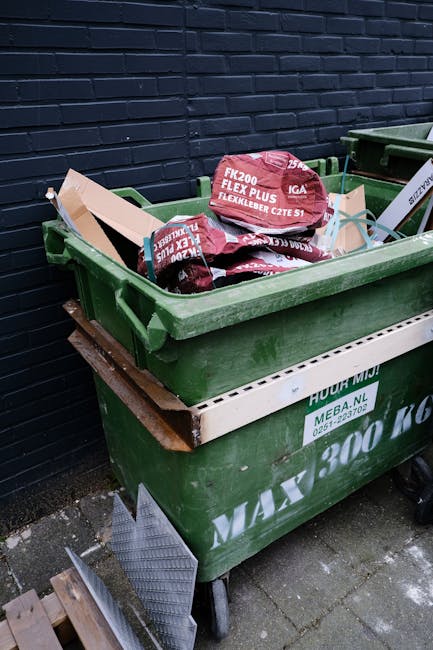
Haringey council rules for bulky rubbish collection explained
If you have an old sofa by the stairs, a broken wardrobe in the hallway, or a mattress that simply will not fit through the front door, you are not alone. Bulky waste has a habit of hanging around until it becomes a proper nuisance. This guide to Haringey council rules for bulky rubbish collection explained breaks the process down in clear, practical terms so you know what counts as bulky rubbish, how collections usually work, what to check before you book, and when an alternative service may be the better choice.
Truth be told, the hardest part is often not the lifting. It is working out the rules, the timings, the limits, and the small details that can cause a collection to be delayed or refused. Let's sort that out properly.
Table of Contents
- Why the rules matter
- How bulky rubbish collection works
- Key benefits and practical advantages
- Who this is for and when it makes sense
- Step-by-step guidance
- Expert tips for better results
- Common mistakes to avoid
- Tools, resources and recommendations
- Law, compliance and best practice
- Options and comparison table
- Case study or real-world example
- Practical checklist
- Conclusion
- Frequently asked questions
Why Haringey council rules for bulky rubbish collection explained Matters
Bulky waste sounds simple, but the rules matter because they affect whether your items are collected first time, whether you stay within the council's accepted list, and whether your waste is handled responsibly. In a busy borough like Haringey, where flats, maisonettes, terraced homes and shared stairwells are common, the practical side of bulky item disposal can be a bit fiddly. A sofa may be easy enough in theory. Getting it downstairs without blocking a communal passage? That is another story.
Following the correct process helps you avoid wasted trips, missed bookings and awkward items left outside overnight. It also helps with safety. Heavy furniture, sharp edges, broken glass, old appliances and awkwardly shaped rubbish can all become a hazard for residents, children, passers-by and collection crews.
There is also a wider environmental angle. Bulky items are often reusable, recyclable, or suitable for specialist disposal. A sensible approach reduces fly-tipping risk and keeps useful materials out of landfill where possible. That is why many households look beyond just "getting rid of it" and think about the cleaner, safer route too. If you are clearing a whole room, or even a whole property, it can be worth looking at broader services like house clearance or home clearance rather than dealing with each item separately.
Expert summary: the council route is often best for a few large items that fit the rules. For larger, mixed, heavy or time-sensitive jobs, a private clearance service may be more practical. Simple enough in principle, but the detail really matters.
How Haringey council rules for bulky rubbish collection explained Works
While exact collection rules can change over time, the usual council approach is straightforward: you request a bulky waste collection, list the items, confirm that they are eligible, and place them out in the agreed location on the correct day. The council then arranges collection subject to its service conditions.
Most councils in London use some version of this model. The key points are usually:
- items must be on the accepted list
- there may be limits on quantity, size, or type
- some items may need special handling, especially electricals or mattresses
- items generally need to be accessible for collection
- you may be asked to book in advance and prepare the items properly
In real life, what catches people out is not the booking itself. It is the preparation. A wardrobe still full of clothes, a bed frame half dismantled, or a broken appliance hidden behind the bins can all slow things down. And if you live in a top-floor flat, stairs and access can change the whole plan.
The most practical way to think about bulky waste collection is this: the council is usually designed for standard household bulky items, not full property clearances or mixed waste from a renovation. If your load includes a bit of everything, you may need a broader waste removal solution instead.
What usually counts as bulky rubbish?
Bulky rubbish normally means large household items that are too big for the regular bin service. Typical examples include:
- sofas and armchairs
- beds and mattresses
- wardrobes and chest of drawers
- tables and dining chairs
- white goods such as fridges or washing machines, where accepted
- large carpets or rolls of flooring, where permitted
- garden furniture and similar oversized household items
But not everything large is automatically accepted. Builder's rubble, loose soil, paint tins, tyres and hazardous materials are often treated differently. That is where people get caught out. A bulky waste booking is not a shortcut for all waste. Annoying, perhaps, but fair enough.
What usually happens on collection day?
On the day itself, the collection team normally expects items to be placed where they can be safely lifted and removed. That may be outside the property boundary, on the pavement edge, or in another agreed accessible location. If the item is tucked behind a locked gate, blocked by parked cars or left in a shared hallway without permission, collection can become difficult or impossible.
Many people underestimate this part. You think, "they'll see it." But if there are four identical black sacks, two bikes, a cot, and a neighbour's recycling box in the same area, confusion can creep in very quickly. One label, one plan, one clear spot. It helps more than you might think.
Key Benefits and Practical Advantages
Using the council route for bulky rubbish can make sense for several reasons. First, it is familiar and structured. You know who is collecting, where the waste should go, and roughly what the process is. That reassurance matters when you are already juggling a busy week, a move, a family job, or just general life admin.
Second, it can be cost-effective for a small number of items. If you only need one sofa gone, or a bed frame and mattress removed, a council collection can be a sensible option. It avoids hiring a vehicle, lifting heavy items yourself, or arranging several trips to a disposal point. Sometimes the simplest route is the one that saves the most energy, not just the most money.
Third, there is a tidy compliance benefit. When you use an established collection process, you reduce the risk of leaving items out in the wrong place or asking a neighbour to "take care of it" in a way that may not be legal. That last one is a classic mistake. A nod and a wink is not a waste strategy.
For properties with more than a single item, it is worth comparing the council option with specialist services. For example, if you are clearing a garage, loft or flat, you may find a more tailored service easier to manage, especially if there is mixed furniture, broken household goods and general clutter involved. Pages such as garage clearance, loft clearance and flat clearance are often more relevant in those situations.
Who This Is For and When It Makes Sense
This topic is especially useful if you are:
- moving house and need to get rid of a few large items
- replacing furniture and do not want the old pieces hanging around
- clearing a spare room, loft, garage or shed
- dealing with a broken mattress, sofa or white goods item
- living in a flat and have awkward access or limited storage
- trying to avoid fly-tipping or illegal disposal, quite rightly
- deciding between council collection and a private clearance service
It makes sense when the job is relatively small, the items are eligible, and you are happy to work to the council's timetable. If you need a fast turnaround, have several heavy items, or want the rubbish removed from inside the property rather than left outside, a private option can be more convenient.
For example, someone emptying a small office or a family room may find a specialist service easier than trying to piece together a council route for mixed contents. In those cases, office clearance or furniture clearance may fit the job better.
Step-by-Step Guidance
If you want to handle bulky rubbish properly, use this simple process. It keeps things calm, which is underrated when a heavy wardrobe is blocking the landing.
- List the items. Write down exactly what you want removed. Be specific. "Old stuff" is not enough.
- Check eligibility. Make sure the items are likely to be accepted as bulky waste and not classed as hazardous, builder's waste, or something else requiring special treatment.
- Measure awkward items. If access is tight, check dimensions. A sofa that just fits in your mind may not fit down a narrow staircase.
- Prepare the items. Empty cupboards, detach loose parts, and keep all collection pieces together.
- Choose the collection point. Put items where they can be safely collected without blocking residents or public access.
- Book the collection. Follow the booking instructions carefully and note any deadlines or access requirements.
- Set a reminder. Collection days have a habit of sneaking up, especially if you are busy.
- Keep proof of booking. If anything goes wrong, it helps to have the confirmation to hand.
If the job turns out to be bigger than expected, pause before overstuffing the booking. A partial job is often more frustrating than booking the right service once. Better to take ten minutes now than spend a whole afternoon moving the same chair in and out of the hall.
A useful preparation checklist
- remove loose contents from furniture
- bag small associated items separately
- disconnect appliances safely before moving them
- protect floors and walls if moving heavy pieces indoors
- make sure access routes are clear
- check whether parking or loading space is needed
Expert Tips for Better Results
One of the smartest things you can do is group your items by type before deciding how to dispose of them. Not every piece of bulky rubbish deserves the same route. Good furniture may be reusable, mattresses are usually a different case, and mixed rubbish from a tidy-up can be better handled as a clearance job.
Here are a few practical tips that often make a real difference:
- Separate reusable from broken items. If a chair, table or cabinet is still in decent condition, it may be better kept aside for reuse or a specialist furniture route.
- Think about access before you book. Narrow staircases, permit parking and basement flats all change the picture.
- Do not leave it until the last minute. Collection slots can fill up, and bulky waste is rarely forgiving when time is tight.
- Bundle compatible waste together. If you are also removing garden clutter or loft contents, organise them separately so you do not end up with a confusing pile.
- Ask yourself what the job really is. Is it one item, or are you actually doing a small clearance? That distinction matters more than people expect.
We have seen many jobs start as "just a sofa" and quietly become "the sofa, a sideboard, two rugs, three lamps, and a stack of boxes from 2019." Happens all the time. No judgement.
Common Mistakes to Avoid
The most common mistake is assuming every oversized item is automatically eligible. It is not. Mixed waste, construction leftovers, hazardous materials and some electrical items may need different handling. Another regular issue is poor placement. If the item cannot be collected safely, the booking can fail even if it was accepted in principle.
Other mistakes include:
- booking the wrong type of collection for the volume of waste
- forgetting to dismantle large items where needed
- not checking whether the item must be outside, inside, or at a specific point
- including prohibited waste with ordinary bulky items
- failing to plan for flats, basements or shared entrances
- leaving items on the pavement too early or in the wrong place
A slightly annoying but important point: if you are unsure whether something is accepted, ask before you leave it out. Guessing can create more hassle than the original mess. And nobody wants to be the person with a disassembled sofa in the rain, waiting for a solution that never arrives.
Tools, Resources and Recommendations
You do not need specialist equipment for every bulky waste job, but a few practical tools make the process easier. A tape measure saves a lot of grief. A screwdriver set, gloves, strong bin bags and a dolly or sack barrow can help if you are moving items safely. For flat-pack furniture, keep the original fixings together in a small bag taped to the item if possible. It sounds trivial; it is not.
For larger or more complicated clearances, consider the following service types:
- furniture disposal for worn-out sofas, tables and other household pieces
- builders waste clearance for renovation debris and mixed building materials
- garden clearance for outdoor clutter, cuttings and broken garden items
- house clearance when the job involves multiple rooms or an entire property
If you are comparing private services, it can also help to review pricing and quotes, along with recycling and sustainability information, especially if you want a solution that is practical and environmentally sensible.
Law, Compliance, Standards, or Best Practice
Bulky rubbish disposal in the UK sits within broader waste responsibilities. In plain English, that means waste should be handled safely, transferred to an appropriate carrier, and disposed of or recycled in line with normal legal duties and local rules. You do not need to become a legal expert, but you do need to avoid dumping waste, handing it to someone unlicensed, or leaving items in a way that creates a hazard.
Best practice is simple:
- use a legitimate collection route
- keep waste separated where practical
- do not mix hazardous items with general bulky waste
- make sure access and storage are safe before collection
- keep booking details and any relevant paperwork
If you are dealing with business premises, the expectations are usually stricter because commercial waste has additional compliance considerations. In that case, a dedicated business waste removal service may be more appropriate. For households, the main thing is to use a route that is accepted, traceable and sensible for the type of waste you have.
Key takeaway: if the item is safe, eligible and accessible, the council route can work well. If the load is mixed, bulky, urgent or awkward, a specialist clearance service is often less stressful and more predictable.
Options, Methods, or Comparison Table
People often compare three main routes: council collection, self-transport, and private clearance. Each has a place. The best choice depends on how much you are removing, how quickly you need it gone, and how easy it is to move.
| Option | Best for | Advantages | Limitations |
|---|---|---|---|
| Council bulky collection | A small number of eligible household items | Simple process, local service, suitable for standard bulky waste | May have item limits, access rules and longer wait times |
| Self-transport to disposal | People with access to a suitable vehicle and lifting help | Direct control over timing, useful for one-off trips | Physically demanding, time-consuming, not ideal for large items |
| Private clearance service | Mixed, heavy, urgent or multi-item clearances | Flexible, can clear from inside the property, suits larger jobs | Usually more expensive than a basic council collection |
If you are already clearing a property, a private route often feels less like a chore and more like a reset. That is especially true for lofts, garages and full homes. It is one of those "worth it on the day" decisions.
Case Study or Real-World Example
A couple in Haringey decides to replace a sofa, a mattress and a battered dining table after a move. At first, they assume the council collection will be the obvious answer. Then they look at the access: a narrow stairwell, no lift, limited parking, and another old shelving unit they forgot about in the spare room. Suddenly it is not just three items anymore.
They separate the load, measure the awkward pieces, and realise the job is better handled as a small clearance rather than a simple collection. That turns out to be the helpful decision. The items are taken in one visit, the access issue is handled properly, and they do not spend the next weekend dragging furniture up and down stairs. Small win, but a real one.
That kind of situation is common. Bulky rubbish often looks manageable until the practical details appear. Once you factor in access, time, and the number of items, the best route becomes clearer.
Practical Checklist
Use this checklist before you book any bulky waste collection or clearance:
- Have I listed every item that needs removing?
- Do all items fit the accepted bulky waste type?
- Are any items hazardous, electrical, or construction-related?
- Have I measured large or awkward pieces?
- Is the collection point clear and safe?
- Do I need to dismantle anything first?
- Have I checked access, parking and timing?
- Would a specialist service be easier for this job?
- Do I need furniture-only removal or a larger clearance?
- Have I kept confirmation details in case I need them?
If you can tick most of those boxes, you are in good shape. If not, take a step back and re-think the route. A little planning now saves a lot of lifting later.
Get a free quote today and see how much you can save.
Conclusion
Understanding Haringey council rules for bulky rubbish collection explained makes a real difference when you are trying to clear space without creating more stress. The basic idea is simple: know what counts as bulky waste, prepare it properly, and choose the disposal route that suits the job rather than forcing everything into one box.
For one or two eligible items, the council service can be a neat solution. For larger clearances, awkward access, mixed rubbish or time-sensitive jobs, a private clearance route may be the calmer option. Either way, the goal is the same: clear the clutter safely, avoid mistakes, and get your space back without the drama.
And once the old sofa is finally gone, the room feels different. Brighter. Easier. Honestly, a bit lighter in the chest too. Small things, but they matter.
Frequently Asked Questions
What counts as bulky rubbish in Haringey?
Bulky rubbish usually means large household items that do not fit in normal bins, such as sofas, mattresses, wardrobes, tables and similar oversized objects. Some items are excluded or treated differently, so it is worth checking before you book.
Can I put bulky waste outside for collection whenever I want?
No, not really. Bulky items normally need to be put out according to the agreed collection time and location. Leaving them out too early can cause obstruction or invite complaints from neighbours.
Do I need to dismantle furniture before bulky collection?
Not always, but it often helps. Dismantling large wardrobes, bed frames or shelving can make them easier and safer to remove. It also reduces the risk of a failed collection if access is tight.
What happens if my item is not accepted?
If an item is not accepted, you may need a different disposal route. That might mean arranging a specialist collection, separating the item from the rest of your waste, or checking whether it needs special handling.
Is a council bulky waste collection cheaper than private clearance?
Often, yes, for a small number of eligible household items. But if you have several items, awkward access or a full-room clearance, a private service can sometimes be better value overall because it saves time and extra effort.
Can I include garden waste with bulky rubbish?
Sometimes no, because garden waste may need a separate route. If you have branches, soil, old planters or mixed outdoor clutter, a dedicated garden clearance service may be more suitable.
What should flat residents do differently?
Flat residents need to think more carefully about access, shared entrances and safe collection points. In many cases, it is better to plan the removal route in advance rather than trying to move everything on the day itself.
Are mattresses and sofas treated the same way?
Not always. Both are bulky household items, but the way they are handled may differ depending on the collection service and the item condition. Some services are more specific about mattresses because of size and hygiene considerations.
Can I use bulky collection for renovation debris?
Usually not. Renovation debris, rubble, plasterboard and similar materials are generally better handled through builders waste clearance or another appropriate service rather than a standard bulky collection.
What is the safest way to move a heavy item before collection?
Use gloves, clear the route, ask for help, and avoid awkward lifting if the item is too heavy. If in doubt, do not force it. A bruised back is a poor trade for an old wardrobe getting out of the way.
How do I know if a private clearance service is worth it?
If you have mixed items, limited time, poor access or a larger clear-out, a private clearance service is often worth considering. It can be especially useful when you want the items removed from inside the property rather than leaving them outside.
Where can I find more information about service options?
You can review the company's service pages, including furniture clearance, waste removal and pricing and quotes, to compare what suits your situation best.